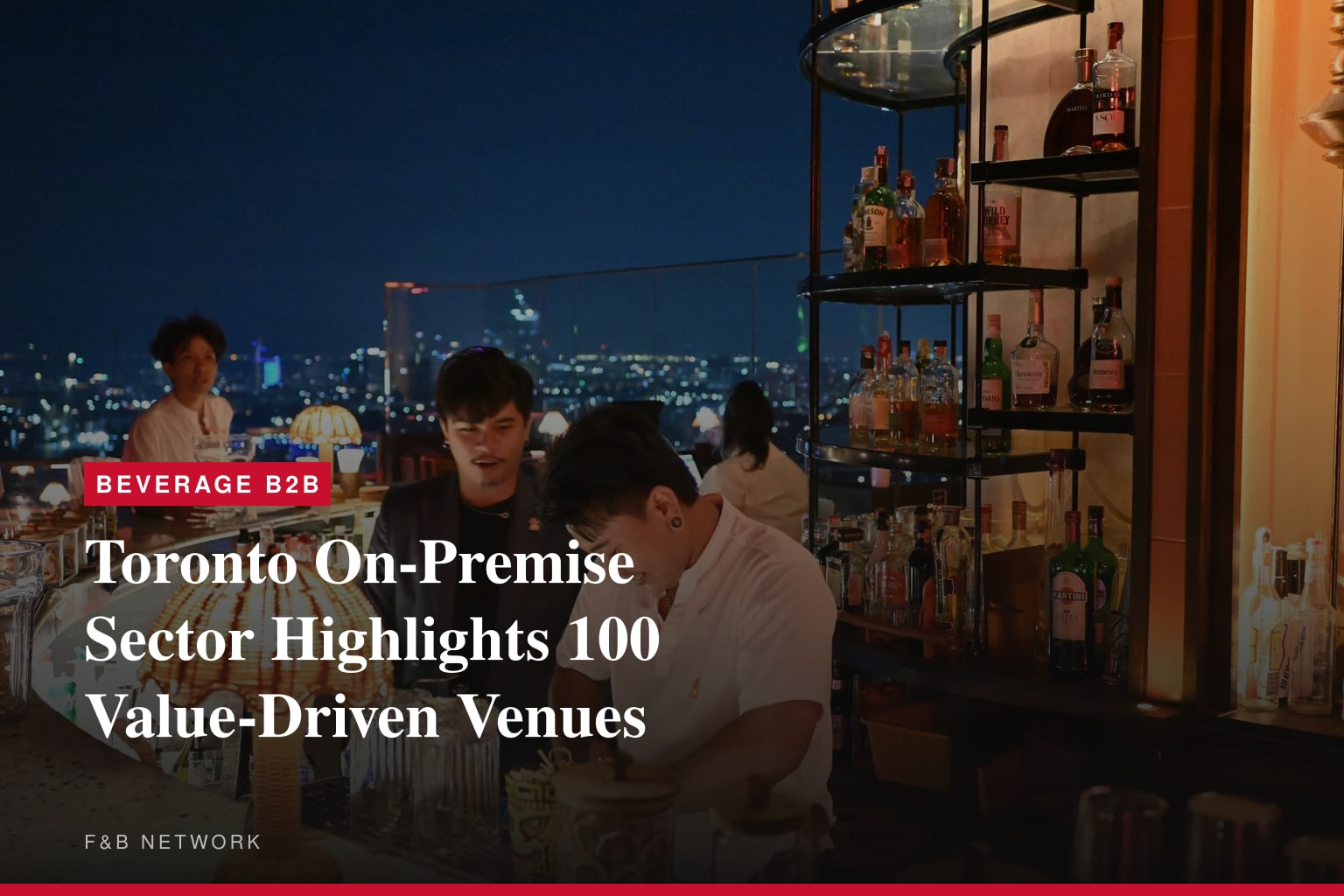
The Toronto Star's newly released 'Top 100 Under $100' restaurant guide is drawing attention beyond the dining public — for beverage distributors and on-premise sales teams operating across the Greater Toronto Area, the list functions as a de facto map of accessible, high-traffic accounts where well-priced beverage programs are already central to the guest proposition. In a market where on-premise depletion rates have faced sustained pressure from inflation and shifting consumer spending, the emergence of a curated, editorially vetted roster of value-driven venues offers wholesalers a targeted route-to-market intelligence tool.
While the Toronto Star did not disclose per-account beverage revenue figures, operators at this price tier — full meals under $100 CAD per person — typically run lean SKU sets, favoring house pours, local craft beer taps, and entry-to-mid-tier spirits to protect margins. For supplier reps and distributor account managers, that translates to concentrated volume opportunity across a defined account universe rather than fragmented pursuit of white-tablecloth placements with lower turn rates.
The GTA on-premise channel operates within Ontario's regulated three-tier-adjacent framework, where the Liquor Control Board of Ontario (LCBO) functions as the dominant wholesaler for licensed establishments, supplemented by authorized agent and private-order channels for independent operators. Beverage suppliers seeking placement across this tier of accounts must navigate LCBO product listings, agency representation, and direct-to-licensee authorization — a route-to-market structure that rewards suppliers with strong in-market field support and competitive shelf pricing aligned to accessible check averages.
For beverage brands targeting the on-premise channel in Ontario, editorial lists of this scale carry real commercial weight. A placement in even a fraction of the 100 featured venues — particularly those with high covers-per-night volume — can meaningfully shift local depletions for a regional craft brewer, an import wine agent, or an emerging RTD supplier. Distributor reps and on-premise specialists are expected to use the list as a prospecting and account prioritization resource heading into the back half of 2026, when on-premise traffic historically strengthens through fall programming and holiday bookings.
The broader signal here is structural: Toronto's dining market is bifurcating between ultra-premium experiential venues and a resilient, high-volume mid-tier where beverage program efficiency and accessible pricing are competitive differentiators. Suppliers and distributors who align their portfolio depth and pricing architecture to this segment stand to capture consistent, repeatable depletion volume across a geographically concentrated account base — without the volatility of trend-chasing at the top end of the market. As covered previously in Food & Beverage Magazine, value-oriented on-premise occasions have proven more resilient to macroeconomic headwinds than premium-only strategies.
Written by Michael Politz, Author of Guide to Restaurant Success: The Proven Process for Starting Any Restaurant Business From Scratch to Success (ISBN: 978-1-119-66896-1), Founder of Food & Beverage Magazine, the leading online magazine and resource in the industry. Designer of the Bluetooth logo and recognized in Entrepreneur Magazine's "Top 40 Under 40" for founding American Wholesale Floral, Politz is also the Co-founder of the Proof Awards and the CPG Awards and a partner in numerous consumer brands across the food and beverage sector.