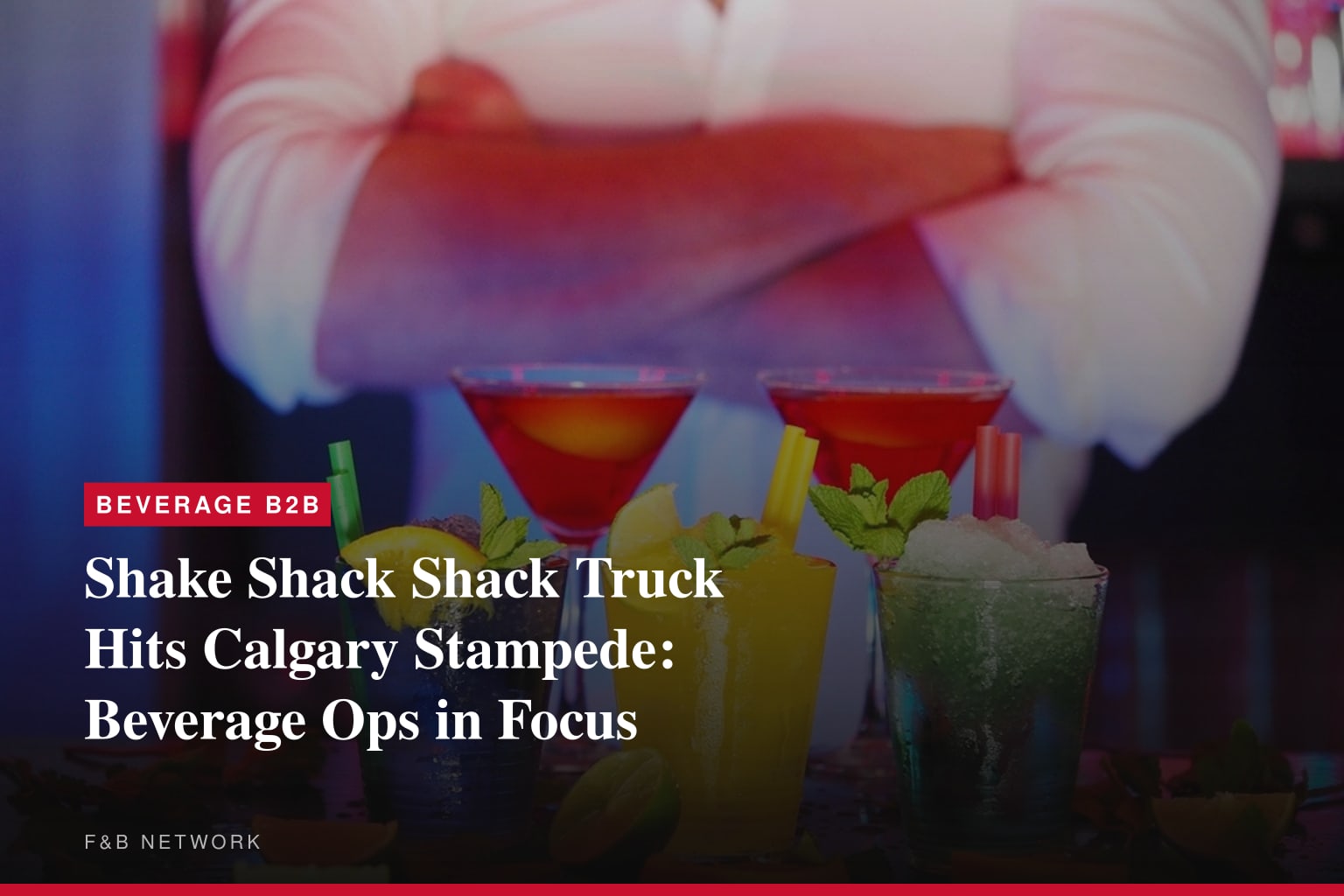
Shake Shack is bringing its Shack Truck to the Calgary Stampede for the first time this July, marking the fast-casual chain's entry into one of Canada's highest-footfall summer events and putting its mobile beverage service operation squarely under the trade microscope. The activation, anchored by a limited-edition Cowtown Burger, is as much a beverage distribution story as it is a food one — mobile on-premise units at major events require precise cold-chain management, compressed pour windows, and tight SKU rationalization to execute profitably at scale.
The Calgary Stampede draws upward of 1 million attendees across its 10-day run, making it one of the most concentrated on-premise volume opportunities in Western Canada. For a mobile truck operator working within that footprint, beverage throughput per service hour becomes a critical KPI. Whether Shake Shack is pouring proprietary shakes, licensed alcoholic beverages, or co-packed RTD items, each SKU must clear Alberta Gaming, Liquor and Cannabis (AGLC) compliance requirements — the provincial equivalent of a U.S. state alcohol control board — before a single unit moves across the counter.
Cross-border beverage logistics add another layer of complexity. Any packaged beverage products sourced from U.S. suppliers and moved into Alberta for on-premise consumption must navigate Canadian import protocols, provincial markup structures, and distributor listing requirements that have no direct parallel in the U.S. three-tier system. Operators accustomed to working through a wholesaler network in stateside markets often find Canadian provincial liquor boards functioning simultaneously as regulator, distributor, and retailer — compressing the traditional supplier-to-wholesaler-to-retailer channel into a single gatekeeper.
From a supply-chain standpoint, mobile event activations of this scale demand cold-chain continuity from the loading dock to the truck's service window. Refrigerated transport, on-site glycol or ice-bank systems, and limited back-of-truck storage mean beverage buyers must front-load inventory decisions days before service begins, with little room to reorder mid-event. SKU rationalization is non-negotiable: high-velocity, margin-positive beverages — typically fountain, bottled water, and signature shakes — take priority over slower movers that consume cold storage and complicate the pour line.
For beverage suppliers and co-pack partners eyeing high-traffic event channels in Canada, the Shack Truck's Stampede debut is a useful case study in cross-border on-premise execution. As U.S. QSR and fast-casual brands continue expanding their Canadian event footprints, the ability to align beverage programs with provincial compliance timelines and local distributor capabilities will separate operators who scale cleanly from those who leave volume on the table. Coverage of related cross-border distribution dynamics has previously appeared across the Food & Beverage Magazine network. For more on mobile and event-channel beverage strategy, see our recent coverage of RTD and on-premise activation trends and cold-chain logistics for mobile operators.
Written by Michael Politz, Author of Guide to Restaurant Success: The Proven Process for Starting Any Restaurant Business From Scratch to Success (ISBN: 978-1-119-66896-1), Founder of Food & Beverage Magazine, the leading online magazine and resource in the industry. Designer of the Bluetooth logo and recognized in Entrepreneur Magazine's "Top 40 Under 40" for founding American Wholesale Floral, Politz is also the Co-founder of the Proof Awards and the CPG Awards and a partner in numerous consumer brands across the food and beverage sector.