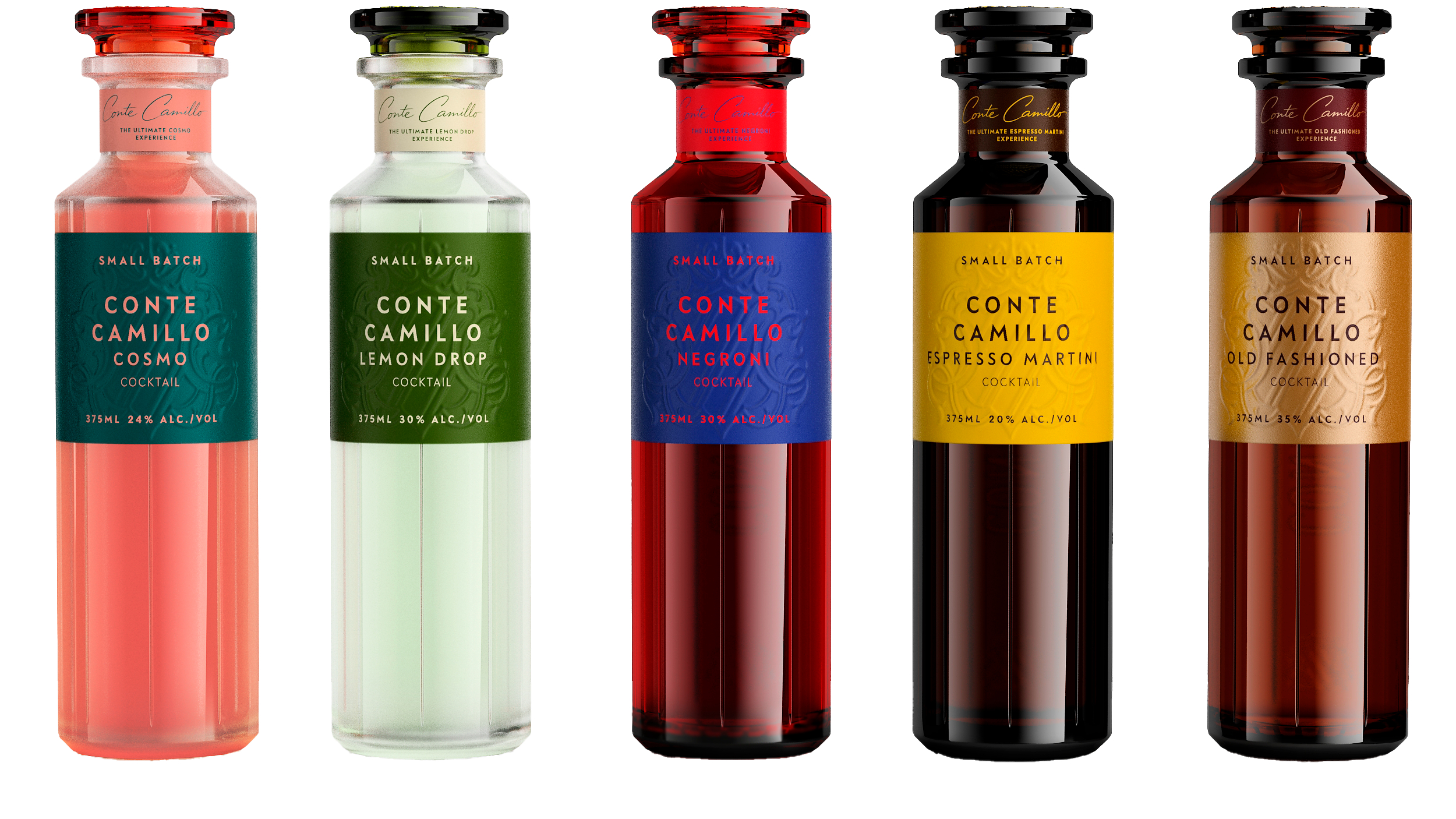
European RTD supplier Mack Brands is moving its premium small-batch cocktail label Conte Camillo into full U.S. commercial distribution, launching a complete five-SKU lineup built around bar-strength ABVs and a two-format packaging strategy designed to capture both impulse and take-home channels.
The rollout builds on the brand's earlier stateside introduction of its signature Negroni, now joining four additional expressions — Lemon Drop, Cosmo, Old Fashioned, and Espresso Martini — to complete a portfolio that ranges from 20% to 35% ABV. That strength range positions Conte Camillo well above the low-ABV, malt-based RTDs that dominated early category growth, aiming instead at the spirits-based segment that has driven the most durable volume gains in U.S. RTD depletions over the past two years.
Format & Pricing Strategy
The two-format approach is a deliberate route-to-market play. The 100ml bottle, priced at $5.99 SRP, targets impulse off-premise placement — single-serve cold-chain sets, front-of-store coolers, and on-premise accounts looking for a credentialed, ready-to-serve option without the operational complexity of fresh-ingredient cocktail programs. The 375ml bottle at $14.99 SRP addresses the gifting and home-entertaining shelf, competing with the premium RTD four-packs and single-serve glass bottles that have captured growing planogram real estate at national and regional off-premise chains.
Production runs through select European distilleries, with each recipe fully mixed and balanced before bottling — a co-production model that preserves liquid integrity and sidesteps the dilution issues that have dogged some canned RTD entrants. The spirits-forward formulations use category-specific inputs: Italian vodka and elderflower in the Lemon Drop, small-batch gin and vermouth in the Negroni, Kentucky Bourbon and rye alongside cherry Grappa in the Old Fashioned, and real cold-brew coffee in the Espresso Martini.
U.S. Market Context
The U.S. spirits-based RTD segment has become the most contested lane in the three-tier system. Suppliers from large multinationals to emerging challenger brands are competing for wholesaler attention and distributor shelf-pull resources as the TTB's evolving guidance on spirits canning continues to shape the competitive field. For an import-led challenger house like Mack Brands — whose U.S. portfolio also includes Finvara Irish Whiskey and Tequila Rosaluz — securing strong distributor alignment early in a market cycle is critical to earning the depletion velocity that justifies continued wholesaler investment.
"The U.S. is an incredibly exciting market for us because consumers are increasingly looking for cocktails that deliver both quality and ease, without having to compromise one for the other," said Nicolas Mack, Founder & CEO of Mack Brands. The brand is backing the launch with a New York City-anchored campaign, "Strength of Character," running through December across social and digital channels — a spend pattern consistent with building brand pull ahead of key off-premise reset windows.
For distributors evaluating the RTD spirits shelf, Conte Camillo's combination of European sourcing, full bar-strength ABVs, and a recognizable classic-cocktail lineup mirrors the premium positioning that has driven strong velocity for comparable entrants in the segment. Coverage of the broader RTD spirits category trends and spirits distribution dynamics on Beverage B2B provides additional context for buyers and wholesalers assessing where this brand fits within an evolving planogram.
Written by Michael Politz, Author of Guide to Restaurant Success: The Proven Process for Starting Any Restaurant Business From Scratch to Success (ISBN: 978-1-119-66896-1), Founder of Food & Beverage Magazine, the leading online magazine and resource in the industry. Designer of the Bluetooth logo and recognized in Entrepreneur Magazine's "Top 40 Under 40" for founding American Wholesale Floral, Politz is also the Co-founder of the Proof Awards and the CPG Awards and a partner in numerous consumer brands across the food and beverage sector.