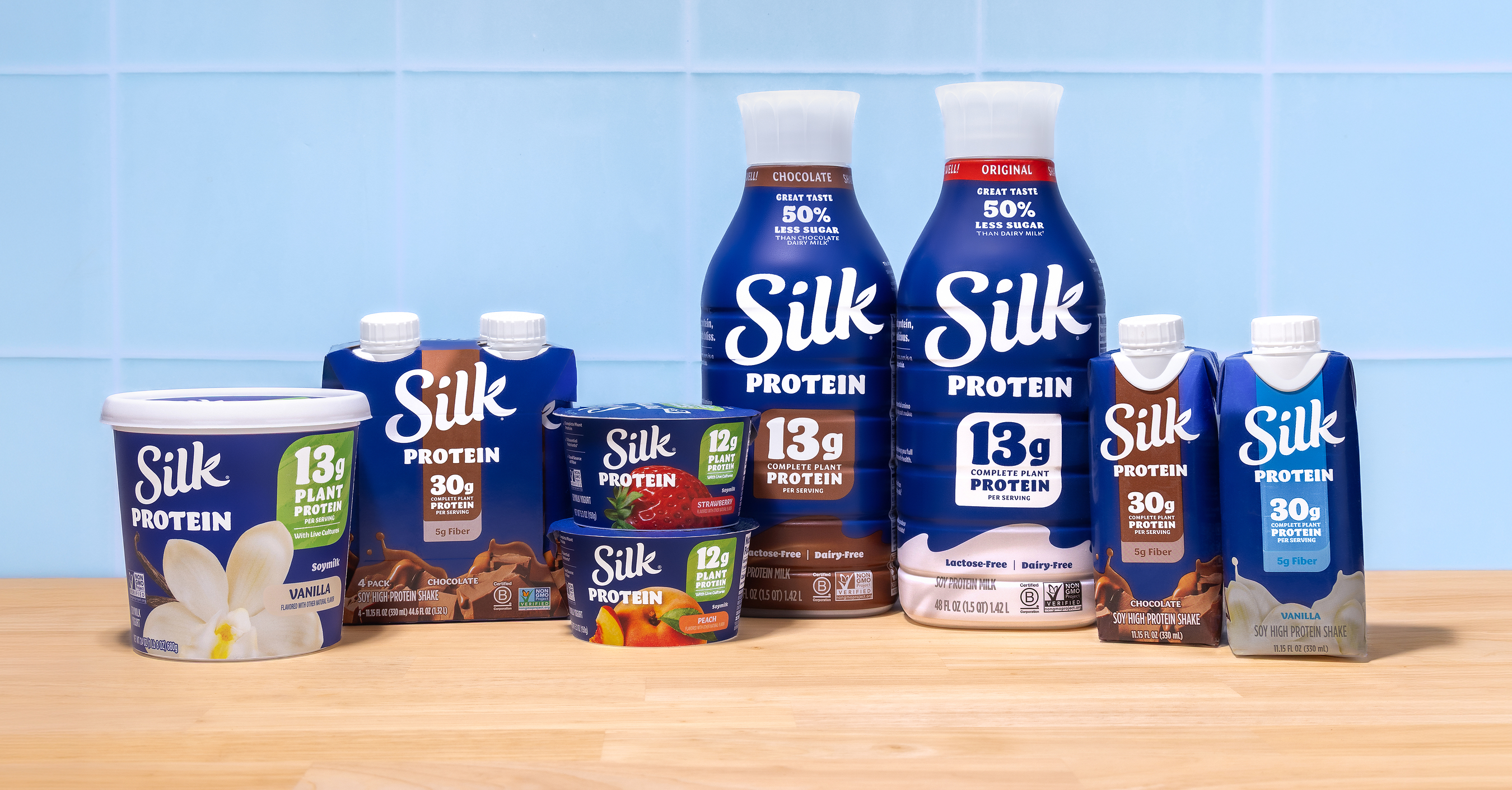
Danone USA is pushing Silk deeper into the functional nutrition aisle with a dual product launch: new Silk Protein Yogurts delivering at least 12g of plant protein per serving and, more significantly for beverage buyers, new ready-to-drink Silk Protein Shakes clocking in at 30g of complete plant protein per bottle. Both SKUs began rolling into major grocery retailers nationwide in July 2026.
The RTD shake entry is the headline move from a distribution standpoint. The high-protein RTD segment — anchored historically by dairy-based incumbents such as Premier Protein and Ensure — has seen accelerating plant-based challenger activity over the past 18 months as retailers expand cold-box and ambient shelf sets to accommodate growing shopper demand for non-dairy functional formats. Silk's established brand equity and Danone's existing wholesaler and direct-store-delivery relationships give the new shakes a meaningful route-to-market advantage that emerging plant-based RTD brands rarely enjoy at launch.
Retail Shelf Strategy
Silk is positioning the protein shakes as a high-protein breakfast and on-the-go snack occasion play — two day-parts that traditionally drive strong velocity in grocery's refrigerated and functional beverage sections. Formulated with complete plant protein, a good source of fiber, and no artificial colors, flavors, or sweeteners, the products are built to satisfy both the nutrition label scrutiny of health-focused shoppers and the clean-ingredient mandates increasingly showing up in retailer planogram qualification criteria. For category managers, that clean-label profile reduces friction in securing premium shelf placement alongside conventional protein RTDs.
Danone has not disclosed case volume targets or suggested retail pricing for the new lineup, but the simultaneous yogurt-and-shake rollout signals a coordinated shelf-block strategy — one designed to occupy multiple planogram positions across the dairy-alternative and functional nutrition sets rather than compete for a single facing. That breadth-of-line approach is consistent with how large CPG suppliers have moved to defend and grow their space in the plant-based dairy aisle, where SKU rationalization has been aggressive as retailers cull underperformers.
Plant-Based RTD Outlook
The broader plant-based beverage segment has faced volume headwinds at retail over the past two years, with category-wide depletions softening as novelty demand fades and price-sensitive consumers trade back to conventional dairy. However, functional sub-segments — particularly high-protein and gut-health formats — have held relatively stronger, driven by shoppers who treat these products as purposeful nutrition purchases rather than lifestyle statements. Silk's decision to lead with protein content (30g per shake is competitive with the top tier of the dairy-based RTD segment) suggests Danone is deliberately repositioning the brand within the results-oriented functional nutrition set rather than the legacy plant-milk aisle.
For distributors and retail buyers, the key near-term question is cold-chain allocation: whether the shakes enter as refrigerated or shelf-stable will determine which distribution infrastructure carries them and which retail sets they compete in. Danone has not specified ambient versus refrigerated format in launch materials. Coverage of related plant-based beverage distribution trends is available in non-alcoholic and functional beverage reporting, and for context on RTD category shelf dynamics, see RTD and ready-to-drink coverage from the Food & Beverage Magazine network.
Written by Michael Politz, Author of Guide to Restaurant Success: The Proven Process for Starting Any Restaurant Business From Scratch to Success (ISBN: 978-1-119-66896-1), Founder of Food & Beverage Magazine, the leading online magazine and resource in the industry. Designer of the Bluetooth logo and recognized in Entrepreneur Magazine's "Top 40 Under 40" for founding American Wholesale Floral, Politz is also the Co-founder of the Proof Awards and the CPG Awards and a partner in numerous consumer brands across the food and beverage sector.
.png)