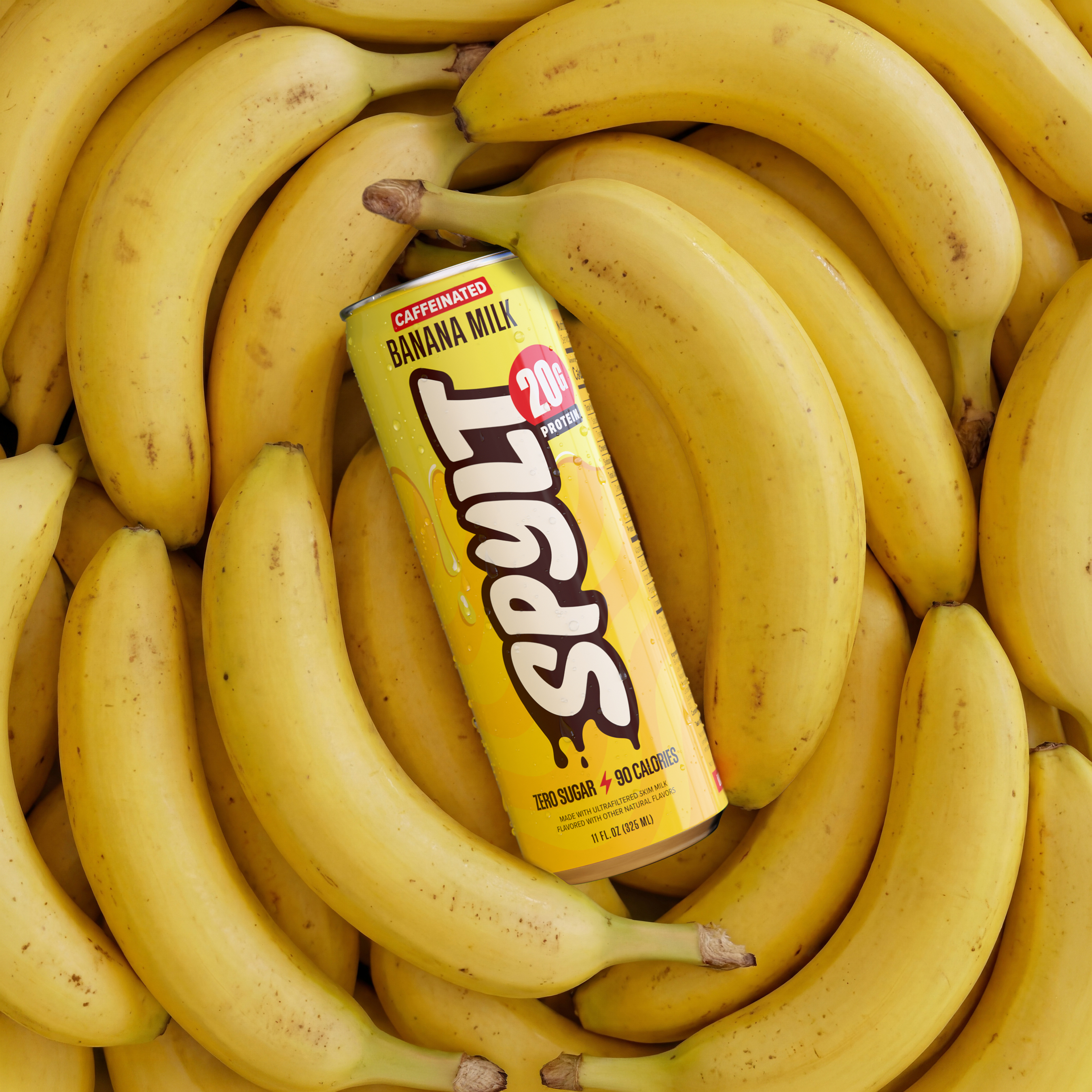
SPYLT is using a limited-edition Banana Milk SKU to test e-commerce as a primary route-to-market, bypassing the traditional three-tier system entirely for the drop. The American Fork, Utah-based brand launched the flavor exclusively on Amazon and TikTok Shop on July 14, with no announced off-premise retail or wholesaler distribution to accompany the release.
The move signals a deliberate DTC-first strategy for new flavor validation — a playbook increasingly common among challenger RTD brands looking to generate depletions data and social proof before committing to broader distributor commitments or retail planogram placement.
The Product Specs
The Banana Milk SKU carries 20 grams of protein, zero grams of sugar, 90 calories, and 60 milligrams of caffeine per can, built on a lactose-free ultrafiltered milk base. That nutritional profile positions it squarely in the functional RTD milk segment alongside high-protein, better-for-you formats that have gained meaningful shelf velocity in both on-premise fitness channels and off-premise natural and specialty grocery.
The nostalgic flavor angle — leaning on lunchbox banana milk as a taste memory — mirrors a broader category trend of legacy flavor cues being deployed in premium, functional RTD formats. Brands from the craft brewing space to mainstream sports nutrition have used nostalgia-driven limited releases to spike trial and generate earned media without the slotting or co-pack commitments that accompany a full retail launch.
DTC as a Test Channel
Launching exclusively through Amazon and TikTok Shop keeps inventory risk contained and gives SPYLT real-time sell-through data without negotiating with a wholesaler network or absorbing distributor margin. TikTok Shop in particular has emerged as a meaningful first-mover channel for functional beverage brands targeting younger demographics, where content-driven commerce collapses the distance between discovery and purchase.
For distributors and retail buyers watching the RTD protein milk segment, SPYLT's "Taste Buds Flavor Department" — the internal concept framing this and future limited drops — is worth tracking as a signal of which flavors may eventually graduate to full three-tier distribution. Brands that validate velocity online before pitching wholesalers arrive at those conversations with depletion-equivalent data that de-risks the ranging decision for both the distributor and the retailer.
The functional RTD milk category has seen sustained growth as consumers seek protein-forward, lower-calorie alternatives to traditional dairy beverages. Coverage of the broader RTD and functional beverage supply chain and non-alcoholic beverage distribution trends reflects how quickly route-to-market strategies in this segment are evolving beyond conventional off-premise channels.
Written by Michael Politz, Author of Guide to Restaurant Success: The Proven Process for Starting Any Restaurant Business From Scratch to Success (ISBN: 978-1-119-66896-1), Founder of Food & Beverage Magazine, the leading online magazine and resource in the industry. Designer of the Bluetooth logo and recognized in Entrepreneur Magazine's "Top 40 Under 40" for founding American Wholesale Floral, Politz is also the Co-founder of the Proof Awards and the CPG Awards and a partner in numerous consumer brands across the food and beverage sector.
.png)