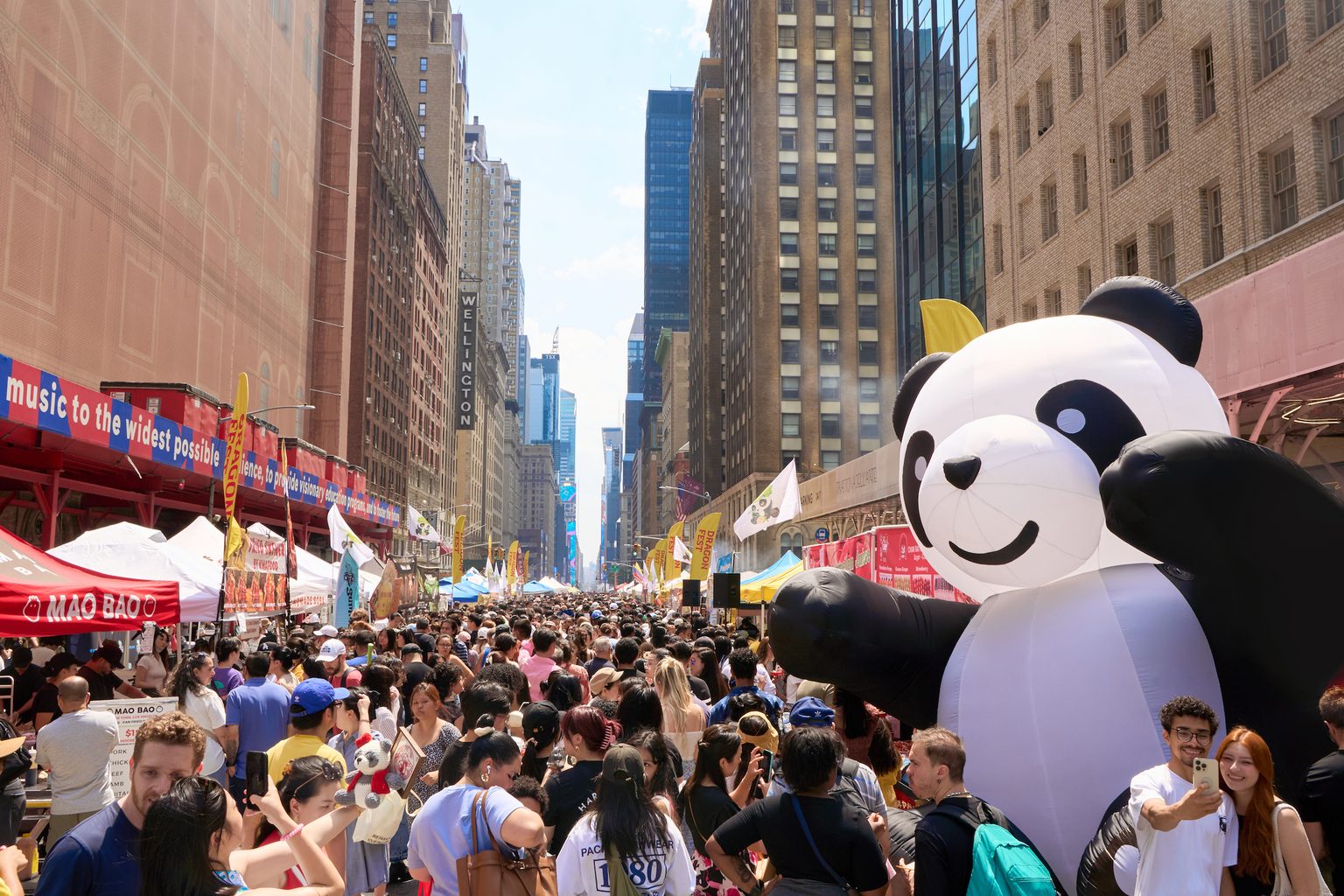
The experiential event landscape is becoming a critical distribution and brand-building channel for food and beverage companies—and Panda Fest demonstrates how strategic festival platforms can drive volume, market penetration, and customer acquisition at scale. Launched in 2024, Panda Fest has expanded into one of the nation's fastest-growing Asian food festivals, welcoming more than half a million attendees during its first year alone across multiple markets. For distributors, importers, brand owners, and retail buyers, understanding how these platforms function offers insight into emerging go-to-market strategies for the AAPI food category.
A Multi-City Distribution Model for Emerging Brands
Founder BiuBiu built Panda Fest on a clear business premise: Asian food vendors—particularly family-owned, immigrant-owned, and first-generation entrepreneurs operating at small to mid-scale—lacked high-volume distribution channels that could simultaneously build brand awareness and drive revenue. What began as Panda Day evolved into a multi-city platform that functions as a controlled environment for brand discovery, category sampling, and customer acquisition.
Rather than duplicating the same event across markets, Panda Fest adapts each experience to reflect local demand while maintaining consistent standards for quality and vendor experience. Every market presents unique logistical considerations, from venue selection and permitting to local partnerships, vendor recruitment, and crowd management. That localized approach allows importers and distributors to test products, assess regional preferences, and build relationships with operators in specific geographies—all within a single weekend framework.
Vendor Support and Portfolio Development
A key differentiator in Panda Fest's model is its operational support for participating businesses. According to BiuBiu, support extends well beyond booth placement to include operational guidance, production planning, and helping vendors communicate unfamiliar dishes to broader audiences. That infrastructure matters to distributors and importers considering brand partnerships; vendors who receive guidance on scaling operations and storytelling are better positioned to sustain retail and foodservice relationships post-event.
Programming emphasizes authenticity and cultural storytelling rather than viral trends alone. While familiar favorites such as soup dumplings, soufflé pancakes, tanghulu, and shaved ice generate social excitement, vendor selection prioritizes depth and diversity of Asian cuisines. That approach creates portfolio diversity for brands and buyers seeking to expand category representation with credible, story-driven products.
Digital Strategy and Vendor Pre-Launch
Panda Fest's digital strategy directly supports vendor exposure and downstream distribution. Rather than broad national marketing campaigns, the organization develops localized content for each destination, collaborates with community-established creators, and highlights participating vendors before tickets go on sale. This pre-event publicity generates consumer awareness and creates data on demand patterns—valuable intelligence for brands and distributors evaluating market entry and inventory positioning in specific regions.
Feedback collected after each festival directly informs future layouts, vendor mixes, and operational improvements, creating a tested model for identifying which products, price points, and concepts resonate with target audiences across different geographies.
Measurable Business Outcomes
For beverage and specialty food distributors, the most compelling aspect of Panda Fest's model is documented business impact. Numerous participating vendors have returned after previous festivals to report expanded customer bases, increased retail placement, and sustained business momentum. Those outcomes demonstrate that festival participation functions as a scalable customer acquisition and brand validation channel—not simply an awareness vehicle.
The organization has announced expansion into additional U.S. markets while exploring year-round engagement through merchandise, creative collaborations, and expanded opportunities for AAPI-owned businesses. For importers and distributors, this trajectory signals ongoing portfolio-building opportunities and a maturing platform for category penetration.
As beverage and specialty food companies pursue diversified distribution channels, Panda Fest illustrates how experiential platforms can drive volume, build brand equity, and create measurable customer acquisition outcomes when structured around operational support, authentic storytelling, and localized market adaptation. The festival model, now tested across multiple geographies, offers importers, distributors, and brand owners a proven framework for accessing high-volume, concentrated customer interaction within controlled retail environments.