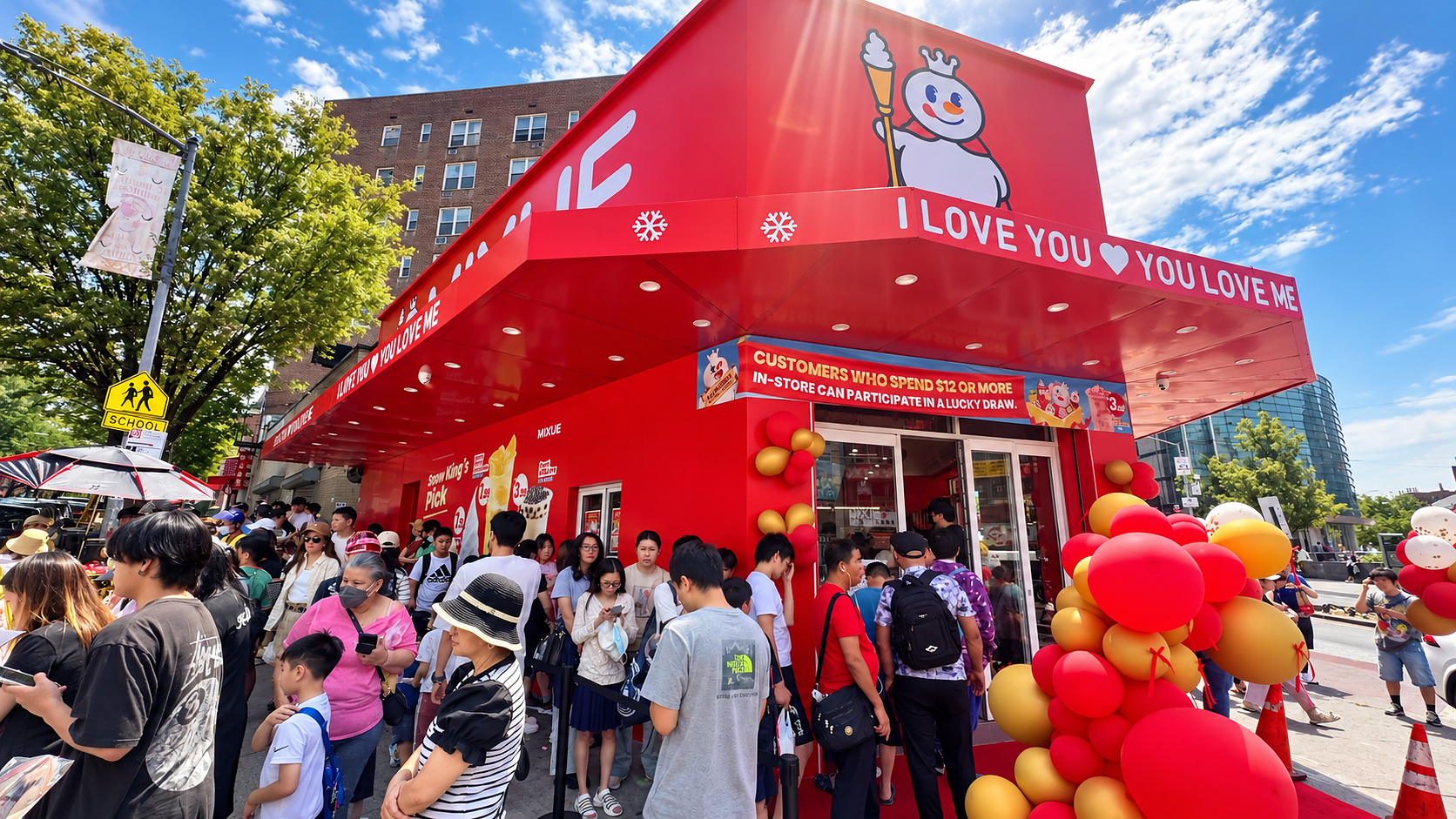
Hong Kong-listed MIXUE Group (02097.HK) is pressing its U.S. market entry with a summer seasonal menu rollout and a route-to-market playbook built on vertically integrated supply chain economics—a structure that has made Mixue the world's largest freshly-made beverage and food chain by store count.
The brand launched six limited-time offerings across its U.S. locations this summer, headlined by the stateside debut of Green Lemon Tea and Green Lemonade. Banana-forward SKUs—Banana MIXUE Shake and Creamy Banana—generated measurable social engagement and repeat-visit behavior, according to the company, signaling early traction with younger consumers who are driving the RTD and freshly-made tea category's domestic growth.
The Supply Chain Advantage
Mixue's competitive positioning in the U.S. does not hinge on conventional promotional pricing. Instead, the group's cost structure is rooted in end-to-end supply chain control—encompassing procurement, production, cold-chain logistics, R&D, and quality assurance at scale developed across its international franchise network. That vertical integration allows the chain to absorb input costs that would compress margins for independent tea-shop operators or smaller franchise systems, while keeping on-premise price points accessible enough to encourage high-frequency visits.
For U.S. franchisees and prospective wholesale ingredient suppliers, that model carries significant implications. Mixue's centralized sourcing means it is unlikely to rely heavily on domestic distributors for core inputs, instead pulling from its China-based supply infrastructure. The franchise model also shifts working-capital risk to store operators, while the parent entity controls the supply relationship upstream—a structure familiar in the boba and freshly-made tea segment but still relatively novel at this scale in the U.S. market.
Category Tailwinds and Competitive Context
Mixue is entering a U.S. tea market that research firms consistently flag as one of the world's largest tea-importing economies. Iced tea remains the dominant format in off-premise retail, but on-premise freshly-made tea—bubble tea, fruit tea, cheese-foam tea—has expanded rapidly across urban and suburban trade areas. Younger consumers are redistributing spend away from carbonated soft drinks toward lower-sugar, flavor-forward alternatives, a shift that benefits the freshly-made tea segment and challenges legacy fountain-beverage operators.
The competitive set in the U.S. includes established regional chains and the continued expansion of Taiwanese and Chinese freshly-made tea brands, several of which have pursued similar franchise-and-supply-chain models. Mixue's differentiator is price accessibility at scale—a proposition that resonates in high-traffic, value-sensitive urban corridors but will face execution pressure as the brand moves into secondary markets where consumer familiarity with the category is lower.
Mixue has indicated plans for additional U.S. store openings and continued menu innovation. How aggressively the group deploys those openings—and whether it pursues co-pack or domestic ingredient partnerships to reduce import logistics exposure—will determine how quickly it can build supply chain resilience in the U.S. market. For more on freshly-made beverage and tea chain expansion in North America, see our coverage of RTD and on-premise tea trends and global franchise beverage supply chains.
Written by Michael Politz, Author of Guide to Restaurant Success: The Proven Process for Starting Any Restaurant Business From Scratch to Success (ISBN: 978-1-119-66896-1), Founder of Food & Beverage Magazine, the leading online magazine and resource in the industry. Designer of the Bluetooth logo and recognized in Entrepreneur Magazine's "Top 40 Under 40" for founding American Wholesale Floral, Politz is also the Co-founder of the Proof Awards and the CPG Awards and a partner in numerous consumer brands across the food and beverage sector.