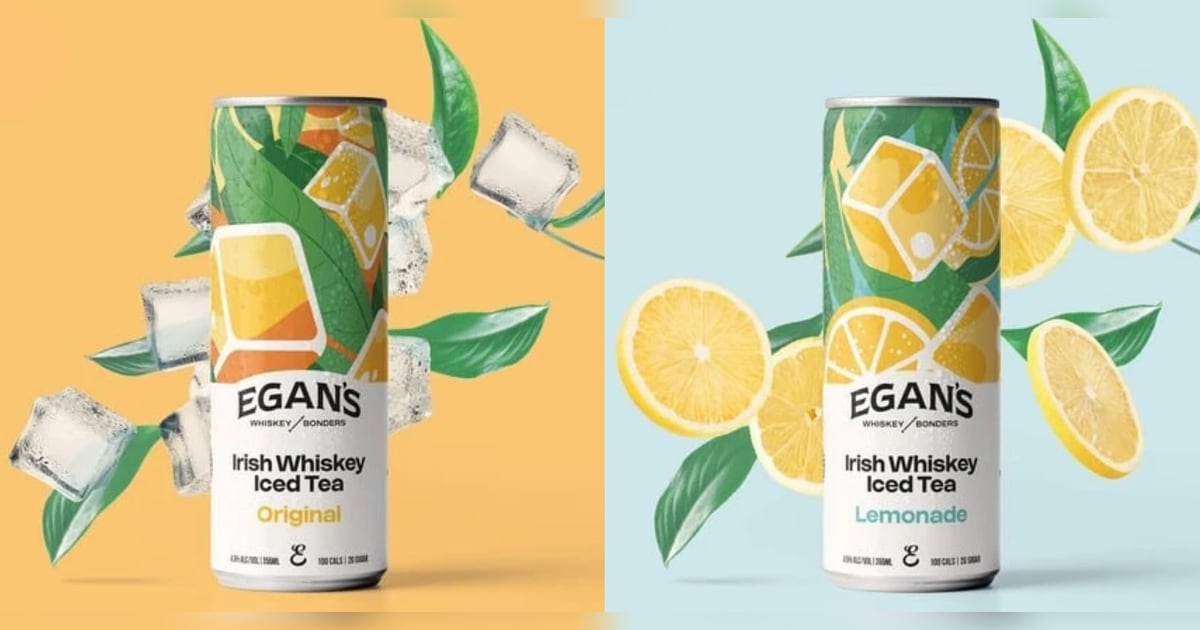
Heritage Brand Enters RTD Spirits Category Egan's Iced Tea, a new ready-to-drink beverage from a sixth-generation Irish whiskey family, has launched in Ireland and New York City. The brand draws on over 170 years of family heritage in tea blending and whiskey bonding, updating those skills for the contemporary RTD market.
Product Details The line includes Original and Lemonade varieties, each combining Irish single malt whiskey, organic tea, and natural fruit flavor. The beverages are non-carbonated, low-calorie, vegan, and gluten-free. Co-founders Rupert Egan and Julie Wells developed the formula through 112 recipe iterations.
Market Position The brand represents a shift in how established whiskey families are approaching spirits RTDs.
Rather than launching whiskey cocktails in conventional formats, Egan's Iced Tea positions tea as the primary flavor driver, with whiskey as a supporting note. This positioning targets consumers seeking lighter, sessionable alternatives to traditional spirit-forward drinks. Co-founder Rupert Egan and brand strategist Julie Wells are available for interviews about the family legacy, product development, and the tea-based RTD opportunity.
Why It Matters
The RTD spirits category continues to attract established beverage producers and heritage brands alike. A family business leveraging its core competencies—tea blending and whiskey bonding—rather than simply bottling existing products signals a more thoughtful approach to category expansion among legacy players.
For more insights and trends in the food and beverage sector, check out more articles in The Food & Beverage Magazine family of publications.
Written by FBM Publications Editors
Frequently Asked Questions
What's the actual alcohol content and price point for Egan's Iced Tea?
The brand hasn't disclosed ABV or retail pricing in initial launch materials, but given the positioning as a sessionable tea-forward drink competing against White Claw and Truly, expect a sub-7% ABV and $8–$12 per can at on-premise. We'll confirm specs once distribution expands beyond Ireland and NYC.
Why would a 170-year-old whiskey family bet on tea instead of doubling down on whiskey RTDs?
The tea blending heritage gives Egan's a competitive moat in flavor development that pure spirits players lack—they literally spent 112 recipe iterations getting the balance right. Tea-based positioning also captures consumers fatigued by spirit-forward RTDs; the category grew 47% year-over-year through 2023, and tea-infused variants are the fastest-growing subcategory at +63% growth.
Which distributors currently have Egan's Iced Tea, and what are their distribution targets?
Launch is live in Ireland and New York City as of publication; specific distributor partnerships haven't been announced publicly. Given the premium positioning and heritage angle, expect initial placement in upscale on-premise venues and specialty retail before wider US rollout in 2025.
How does Egan's compete against established players like Guinness Blonde or Jameson Ready Cocktails?
Those brands lead with whiskey recognition; Egan's inverts that equation by leading with tea flavor and positioning whiskey as a supporting ingredient. This targets the growing segment of spirit drinkers seeking lower ABV, calorie-conscious options—a gap Diageo and Pernod Ricard's existing RTD portfolios aren't aggressively filling.
What's the margin profile on RTD tea-based spirits versus traditional canned cocktails?
Tea-based RTDs typically command 35–42% distributor margins versus 28–35% on spirit-heavy RTDs due to lower COGS on tea versus aged spirits. However, Egan's premium positioning and limited scale mean initial wholesale pricing will skew toward the high end of that range; margins normalize only after volume hits 500K–1M cases annually.