California Soju Brand Eyes National Expansion Hello Soju announced Wednesday it is expanding into Colorado and Texas, bringing its sparkling ready-to-drink cocktails and flagship soju spirit to four states total. The brand is now available at BevMo!, select Target locations, Total Wine & More, Gelson's, and Lee's Liquor, with national expansion planned through 2027. The move targets two of the nation's most active beverage markets. In Colorado, Hello Soju is debuting at the Denver Food & Wine Festival. "Texas and Colorado are two of the most exciting beverage markets in the country, and Hello Sojo sits at the intersection of two of the fastest growing categories in alcohol beverage: soju and spirit-based RTD's," says Elisabeth Baron, CEO of Hello Soju. "Both markets are epicenters for discovery, and we believe Hello Soju offers an accessible, fun, and better-for-you way to bring people together."
RTDs Consolidating Around Premium, Spirit-Based Profile The expansion comes as spirit-based ready-to-drink cocktails post the strongest growth in the U.S. alcohol market. RTDs and canned cocktails grew 34.7% in volume year-over-year in April 2026 across 18 U.S. control states—the fastest of any alcohol category—while total spirits fell 1.2%, according to NABCA data cited in The Spirits Business in May 2026. The category is also undergoing significant consolidation. Spirit-based products climbed from 55% to 67% of RTD launches between 2021 and 2024, while malt-based hard seltzer volumes fell 10%, with canned cocktails absorbing that share, per Global Drinks Intel. New RTD launches across the top 10 markets dropped nearly half, from 3,400 in 2021 to 1,800 in 2024, reflecting a shift toward fewer, higher-quality offerings.
Soju Outpacing Spirits Market Soju itself is outpacing the broader U.S. spirits market. U.S. soju volume is projected to grow at a 16% compound annual growth rate between 2024 and 2029, against a projected 2% decline for total U.S. spirits volumes over the same period, according to IWSR's April 2026 report "Riding the K-wave: soju soars in the US." Flavored soju now represents more than half of U.S. soju volumes, a sharp rise since 2019, with flavored and RTD formats driving the on-ramp for new consumers.
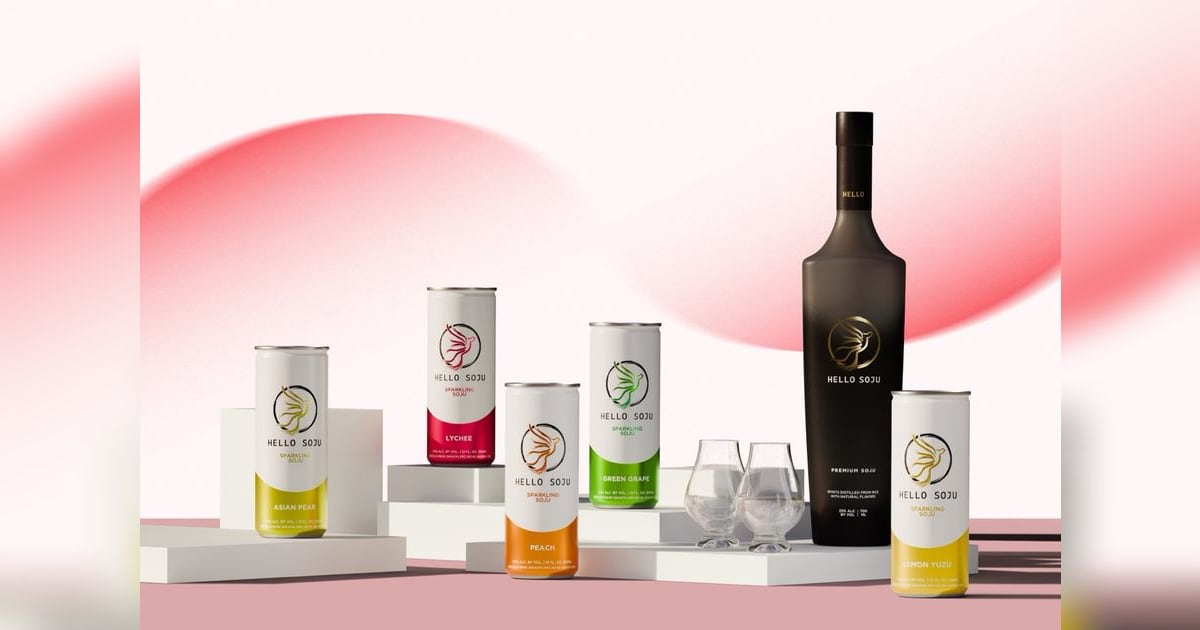
Product Positioning and Recognition Hello Soju is made in California from non-GMO California sticky rice and distilled using traditional Korean methods. The RTDs blend the flagship spirit with real fruit juice and no added sugar in five varieties: Asian Pear, Lychee, Lemon Yuzu, Peach, and limited-edition Green Grape. The brand has earned recognition this year, including a Double Gold for the Flagship Soju Spirit at the 2026 CHILLED 100 Awards and Platinum at the 2026 L.A. Spirits Awards. The Sparkling Soju Asian Pear scored a perfect 100-point rating and Double Gold at the CHILLED 100 Awards. "At Hello Soju we believe soju is a premium spirit that deserves to be recognized and celebrated on the global stage, and we're paving a new path similar to what Surfside and High Noon have done in their respective categories," Baron says.
Retail and Cultural Partnerships Hello Soju's retail presence is expanding, with increased availability at Target locations across California and Nevada. The brand has also partnered as the official soju partner of LAFC at BMO Stadium. Consumers in most U.S. states can order directly through HelloSoju.com, with expanded retail availability coming soon. California distribution includes partnerships with Chubby Group (Chubby Social, NIKU X), Ahgassi, Houston Brothers Hospitality (Andy's), Openaire at The Line Hotel, and multiple Baekjeong locations.
Why It Matters
Operators in Texas and Colorado now have access to a premium, spirit-based RTD positioned at the intersection of two high-growth categories. The expansion signals continued premiumization in the RTD space, with consumers moving away from malt-based, high-sugar products toward craft spirits with cleaner flavor profiles. Retailers stocking Hello Soju are tapping into both the soju growth trend and the broader RTD momentum that is reshaping U.S. alcohol consumption.
For more insights and trends in the food and beverage sector, check out more articles in The Food & Beverage Magazine family of publications.
Written by FBM Publications Editors