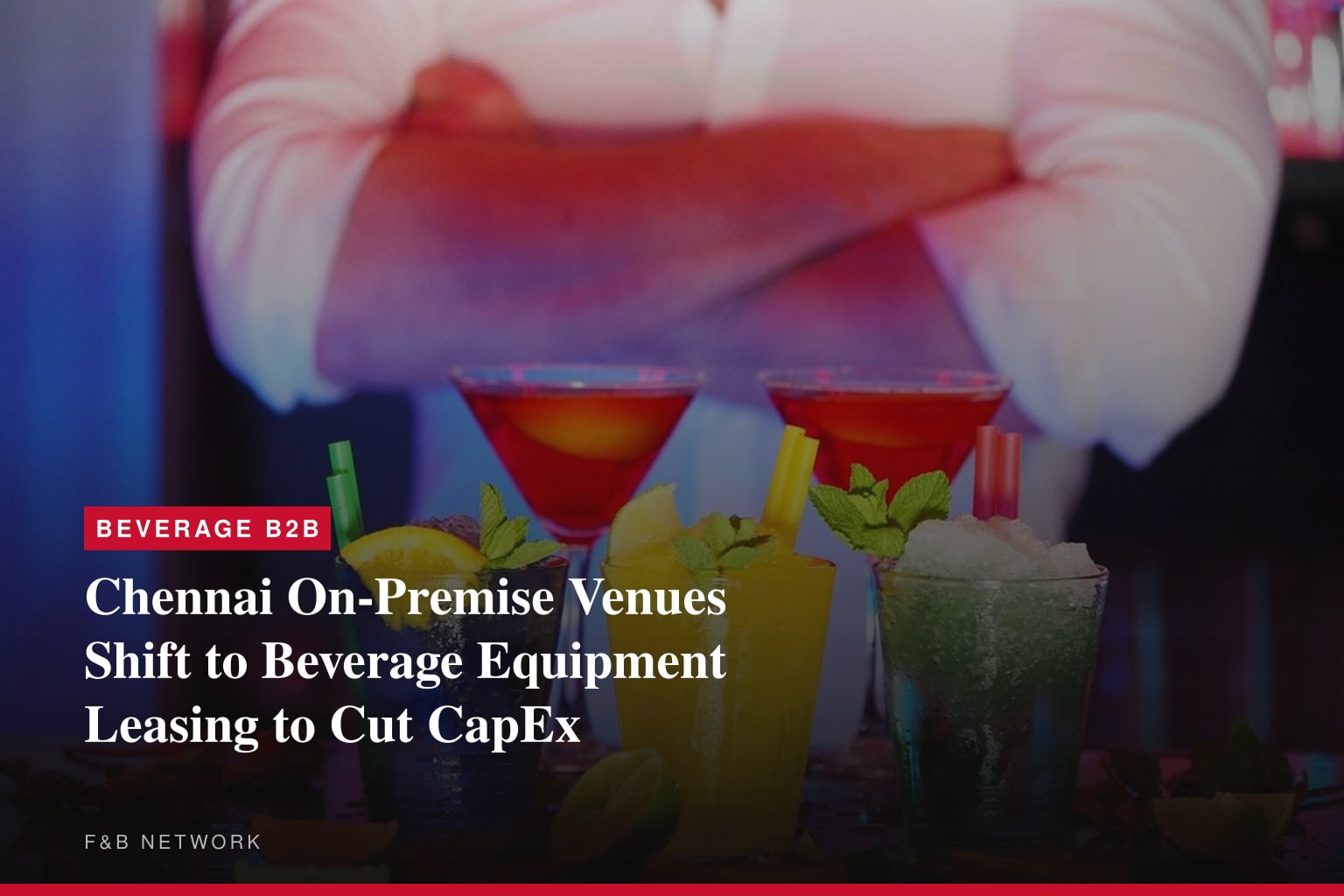
South India's on-premise beverage sector is accelerating a structural shift away from outright capital equipment purchases toward monthly leasing arrangements for draft systems, glycol chillers, refrigerated back-bar units, and cold-chain infrastructure. The pivot is most visible in Chennai's dense hospitality corridors — Velachery, Adyar, the OMR tech belt, and T. Nagar — where operators are weighing lump-sum outlays against flexible monthly plans as venue tenure shortens and resale markets for used commercial refrigeration remain thin.
The commercial pressure is tangible. A fully specified four-tap draft tower with a glycol chiller, CO₂ infrastructure, and back-bar cooler can run $8,000 to $12,000 installed, before factoring in routine maintenance and eventual decommissioning costs. Equipment-as-a-service providers are now countering with bundled monthly plans that absorb servicing, swap-out rights, and logistics — structuring deals that preserve operator cash flow while locking in longer-term service relationships. The model mirrors dynamics already well-established in keg-loan and tap-handle programs that global brewers have long used to secure on-premise placement.
For beverage suppliers and their distributor networks, the shift carries real route-to-market implications. When an operator leases rather than owns pouring equipment, the provider relationship can influence which SKUs land on the planogram and which brands secure the limited cold-face real estate in a given venue. Distributors operating in the three-tier system who have historically used equipment support — cold-boxes, branded coolers, draft line cleaning programs — as a below-the-line pull mechanism will need to reassess how those tools compete against full-service leasing platforms that are supplier-agnostic. Depletion velocity at the account level, not just shipment volume into the wholesaler, becomes the metric that matters most in this environment.
The cold-chain dimension adds further complexity. Chennai's climate places acute stress on refrigeration continuity, making uptime guarantees in a lease agreement operationally significant. For beer and ready-to-drink categories especially, cold-chain failure translates directly into depletions lost and potential product returns — costs that fall on the distributor under most market agreements. Equipment leasing contracts that bundle preventive maintenance and rapid-swap SLAs can therefore reduce distributor liability, even as they change who controls the hardware on the floor.
Category observers watching South India's beverage infrastructure build-out note that the leasing trend also reflects broader capital discipline following a period of rapid on-premise expansion. As craft beer, premium spirits, and the RTD segment compete for limited tap handles and refrigerated shelf space across Chennai's growing bar and restaurant base, the ability to enter and refresh an account without a large equipment commitment lowers the barrier for emerging brands seeking trial. Suppliers bringing new SKUs to market through co-pack or contract brewing arrangements — already managing tight margins — stand to benefit most from an ecosystem where entry costs at the on-premise level compress alongside their own input economics. The route-to-market playbook across South India's Tier 1 cities is being rewritten one lease agreement at a time.
For deeper context on how equipment programs are reshaping distributor economics nationally, see our coverage of cold-chain investment trends in on-premise distribution and the evolving RTD route-to-market strategies driving South Asia beverage growth.
Written by Michael Politz, Author of Guide to Restaurant Success: The Proven Process for Starting Any Restaurant Business From Scratch to Success (ISBN: 978-1-119-66896-1), Founder of Food & Beverage Magazine, the leading online magazine and resource in the industry. Designer of the Bluetooth logo and recognized in Entrepreneur Magazine's "Top 40 Under 40" for founding American Wholesale Floral, Politz is also the Co-founder of the Proof Awards and the CPG Awards and a partner in numerous consumer brands across the food and beverage sector.