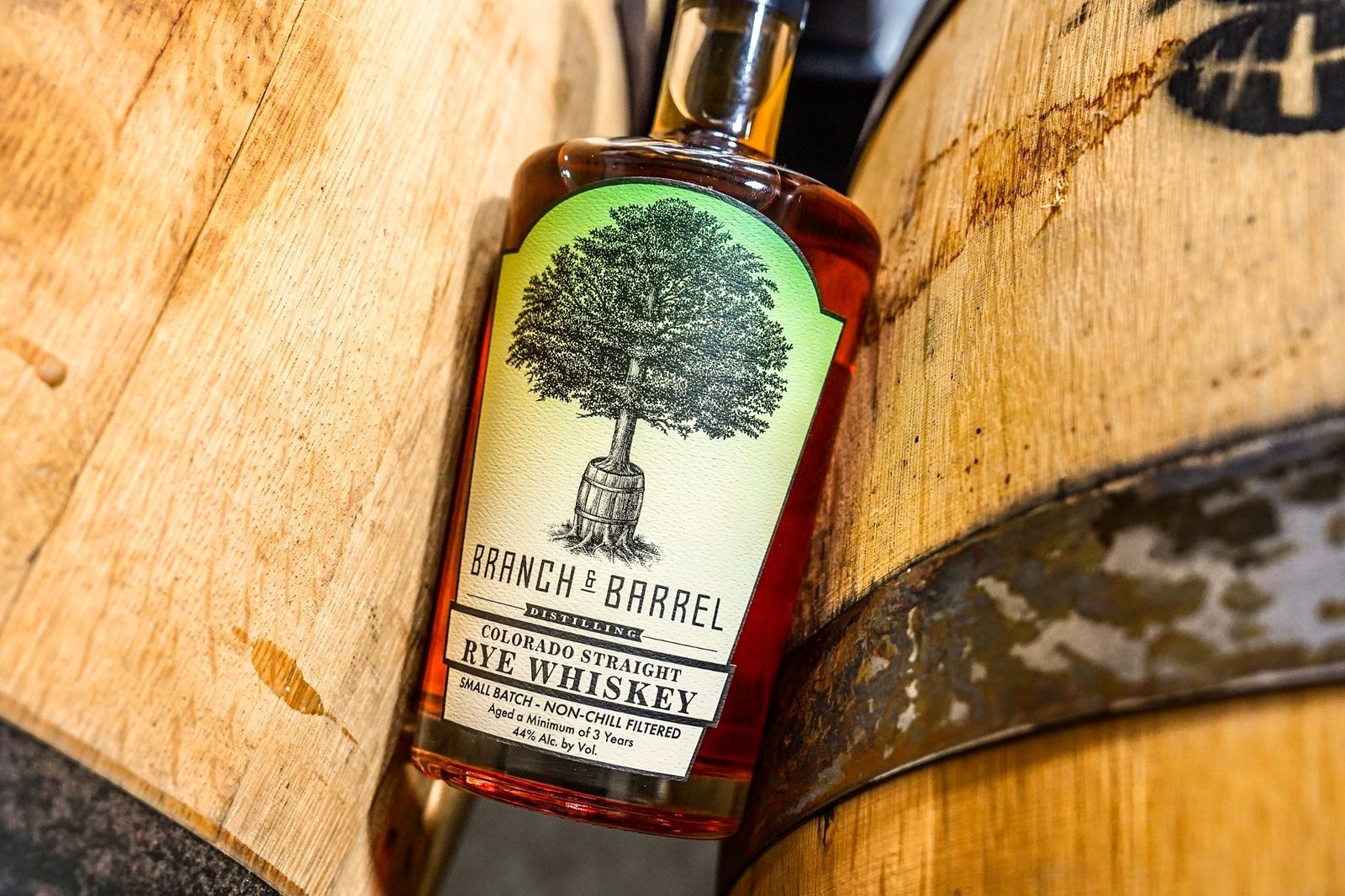
Colorado Distillery Applies Bourbon Sensibilities to Rye Category Branch & Barrel Distilling, the Centennial, Colorado-based bourbon producer, has entered the rye category with its first Straight Rye Whiskey release. The spirit features a 51% rye, 40% corn, 9% barley mash bill and three years of barrel aging—a composition that tilts toward more sweetness and roundness than typical rye expressions. The rye grain is sourced from Colorado's San Luis Valley, where hard winter rye is grown as a winter cover crop to protect topsoil from erosion. Branch & Barrel sources its water from the Arapahoe Aquifer, a groundwater source naturally filtered through sandstone and shale over millions of years. "This build is a bit corn-heavy for a rye, but we're bourbon people, so we're bringing those bourbon sensibilities to this bottle to create something uncommonly smooth and drinkable," said Mitchell Nester, Branch & Barrel's Master Blender. "Straight Rye Whiskey has all the dynamic flavor attributes of rye with the smoothness and balance of bourbon. The time spent aging this spirit in Colorado's dramatic climate has resulted in a profile that showcases more sweetness than your typical rye, adding dessert-y crème brûlée flavors atop notes of herbs and spices."
Colorado's Whiskey Identity The release reflects a broader trend in Colorado, where high-altitude climate, hyper-local grain sourcing, and growing craft distilling are establishing the state as a distinct whiskey region outside traditional American whiskey hubs. Branch & Barrel's rye extends this approach by applying the same terroir-focused methodology that defined its bourbon program to a new category. Straight Rye Whiskey is now available in limited distribution across Colorado.
Why It Matters
For on-premise and retail operators tracking craft whiskey trends, Branch & Barrel's entry into rye signals how regional distillers are using local sourcing and climate characteristics to differentiate within established categories. The corn-forward mash bill represents a deliberate departure from traditional rye profiles—a positioning that could appeal to bourbon drinkers looking to explore adjacent categories.
For more insights and trends in the food and beverage sector, check out more articles in The Food & Beverage Magazine family of publications.
Written by FBM Publications Editors