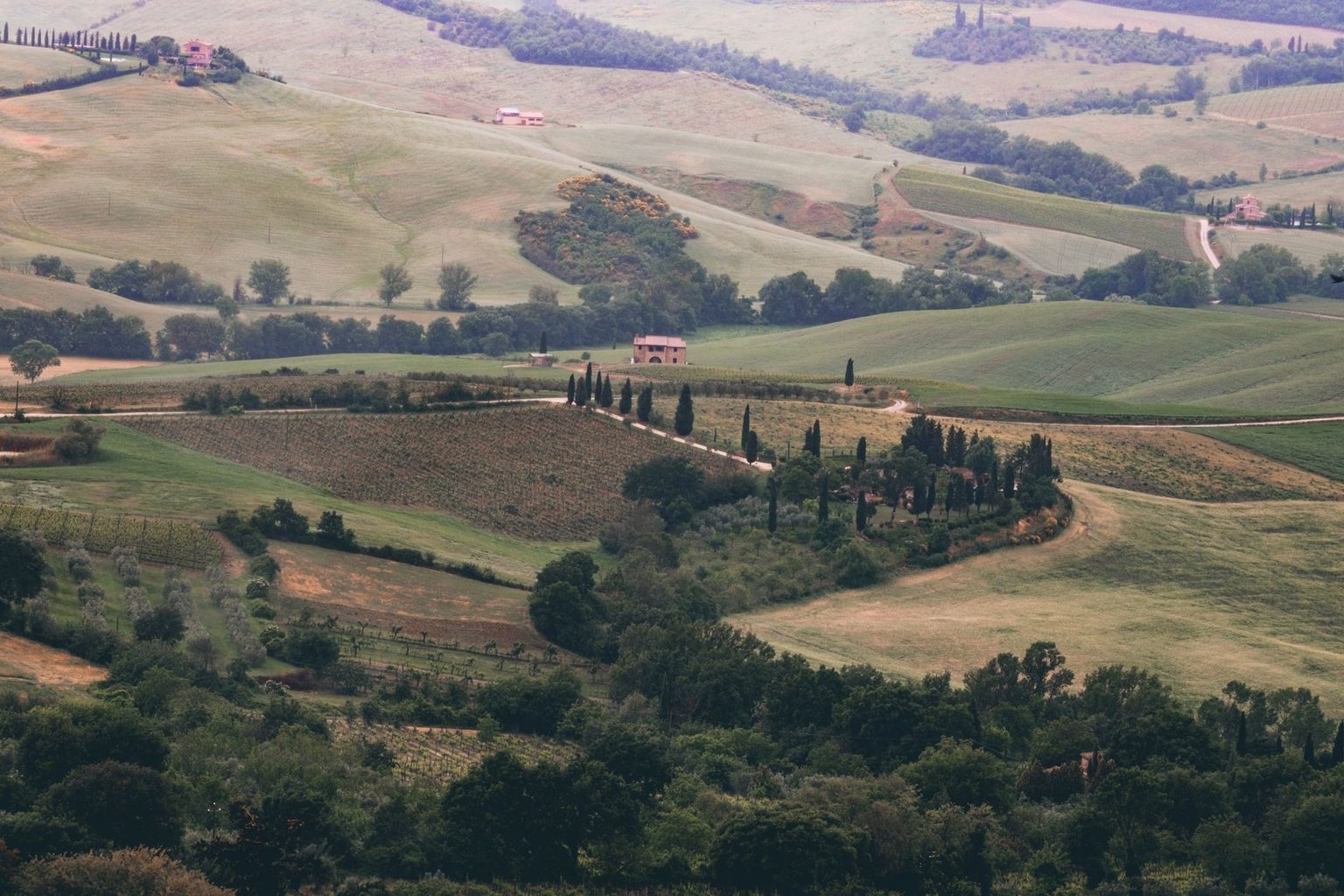
Gratena, a Tuscan winery, has staked its identity on two grape varieties grown nowhere else commercially: Sangiovese and Gratena Nero, a recently rediscovered indigenous cultivar that the winery exclusively produces.
Indigenous Varieties and Terroir Gratena Nero was officially certified by the Tuscany Region in 2017 as a distinct variety. Research in 2018 confirmed it is a synonym of Incrocio Terzi 1, a small-scale grape historically planted around the Bergamo hills—a connection to the winery's own history, as its previous owner came from that region. By limiting production to these two varieties, the winery aims to establish a singular terroir expression rather than diversify its portfolio.
Natural Winemaking Approach The winery's production methods emphasize minimal intervention.
Harvesting is done by hand, and fermentation occurs spontaneously without added yeasts or sulfites. The winery does not use fertilizers, relying instead on rainfall and the natural ecosystem of its 140 hectares of surrounding forest. Fermentation tanks are placed outdoors, allowing natural day-and-night temperature fluctuations during processing—no temperature control is applied. The winery eliminated wooden barrel aging in 2016, switching entirely to steel vessels to preserve varietal and terroir characteristics. Minimal sulfite additions occur only before bottling to enable long-term aging. "Our wines must express our terroir, so the flowers and plants of our 140 hectares of forest surrounding our vineyards must give their support," the winery notes.
Why It Matters
For operators sourcing premium wine, Gratena represents a narrowly focused producer betting on regional authenticity and natural methods—positioning itself apart from larger producers managing multiple varietals and modernized production systems.
For more insights and trends in the food and beverage sector, check out more articles in The Food & Beverage Magazine family of publications.
Written by FBM Publications Editors