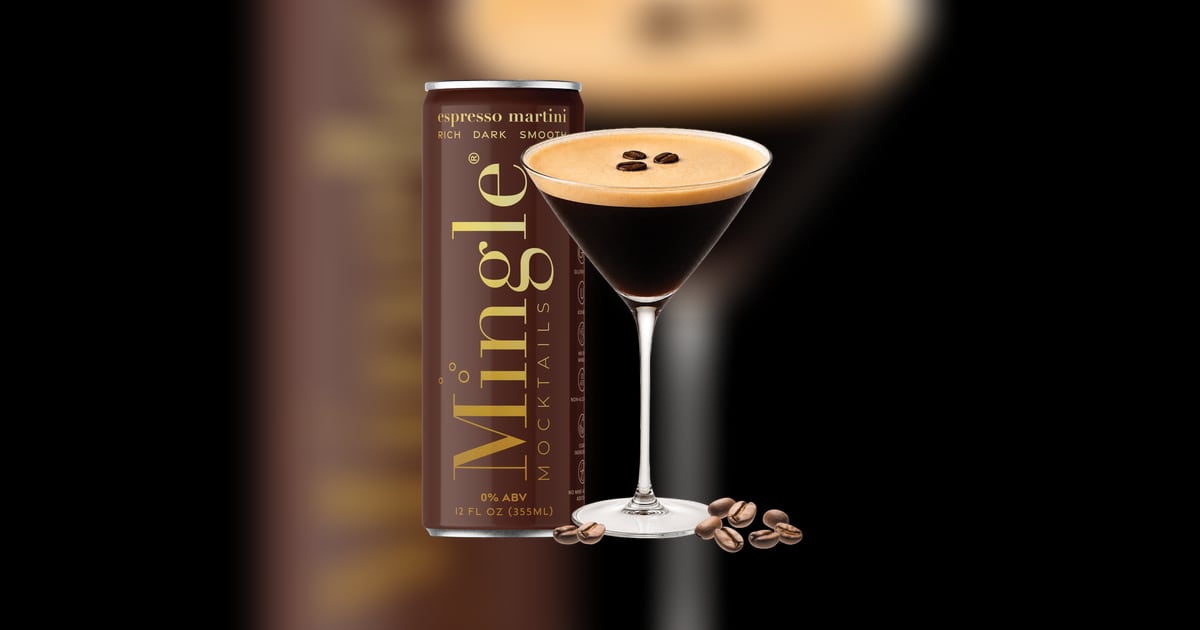
Mingle Fills Gap in Non-Alcoholic Cocktail Market Mingle Mocktails is launching a limited-edition non-alcoholic Espresso Martini on October 1, capitalizing on growing consumer demand for NA versions of culturally relevant cocktails. The move comes as the non-alcoholic cocktail category hit $1 billion in 2025, though most brands have yet to address the Espresso Martini occasion specifically. The 85-calorie drink contains 75mg of caffeine and is formulated to mimic the original's flavor profile: "Rich espresso meets dark chocolate in this smooth, still (no bubbles), alcohol-free take on the classic cocktail," according to the brand. Mingle recommends adding the product to a shaker with ice before serving.
Customer-Driven Development The launch stems directly from customer feedback.
Mingle, which has grown to over 13,000 retail doors and increased revenue more than 50% year-over-year, says its loyal base has been requesting a more elevated, indulgent option with the caffeine boost of an Espresso Martini. Founder Laura Taylor framed the release around the brand's core mission: "No one should feel left out of the occasion because they're not drinking. Rather than creating an alternative simply for the sake of having one, Mingle is using a highly recognizable cocktail occasion to make the non-alcoholic experience feel just as considered, social and celebratory."
Distribution and Pricing The Espresso Martini will be available at Mingle's website, Amazon, Total Wine, Whole Foods, Sprouts, Shaws, Star Markets, Giant Eagle, Giant Landover, Winn Dixie, and Raley's. A 12-pack of 12 fl oz. cans retails for $44.95. The timing targets Sober October, Dry January, and holiday entertaining season—occasions when consumers increasingly seek ritualistic social drinking experiences without alcohol.
Why It Matters
With the NA cocktail category approaching $1 billion in sales, operators and retailers face growing pressure to stock culturally resonant non-alcoholic options, not generic alternatives. Mingle's approach—targeting a specific, high-demand cocktail occasion rather than creating a product first—signals how successful NA brands will compete in an increasingly crowded market.
For more insights and trends in the food and beverage sector, check out more articles in The Food & Beverage Magazine family of publications.
Written by FBM Publications Editors