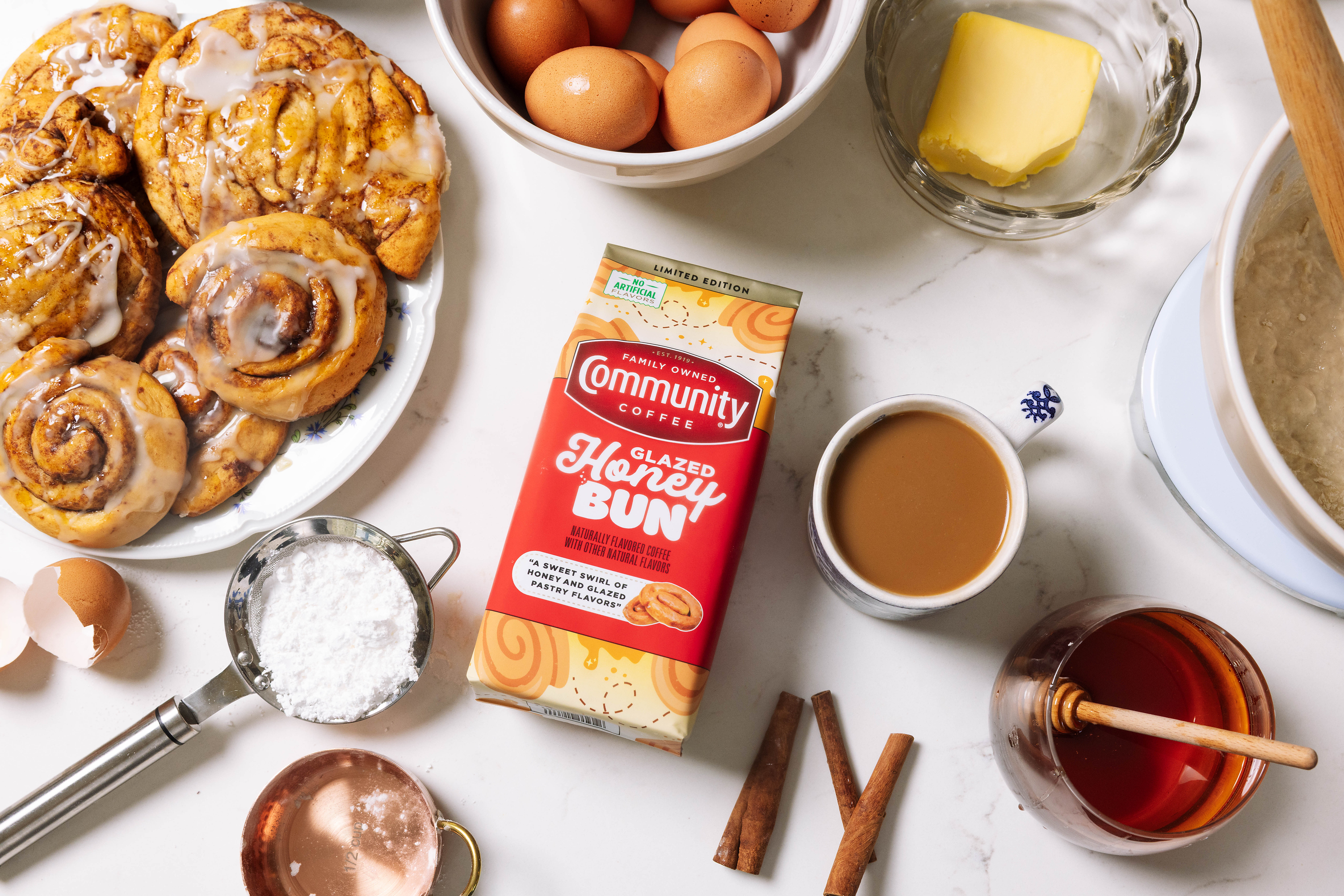
Baton Rouge-based Community Coffee is pushing further into the bakery-inspired flavor segment with the launch of Glazed Honey Bun, a limited-time-only (LTO) ground and single-serve coffee rolling out to national and local retailers, CommunityCoffee.com, and Amazon through November 2026 or while supplies last. The move extends a deliberate SKU strategy the fifth-generation family brand has been executing for several years — testing bold dessert profiles as seasonal LTOs before evaluating them for permanent shelf placement.
The SKU and Pricing
Glazed Honey Bun is a naturally flavored, medium-roast coffee carrying honey and buttery dough notes. The SKU launches in two formats: an 11 oz. ground bag at $10.99 and Keurig K-Cup pods in 10-count ($10.99) and 22-count ($18.49) configurations. The dual-format rollout — covering both drip and single-serve — maximizes planogram flexibility for retail buyers and broadens the off-premise reach without requiring separate supply-chain setups. The flavor is gluten-free, allergen-free, and contains no added sugar or artificial sweeteners, attributes that retail buyers increasingly require for mainstream grocery placement.
Flavor Strategy and Route to Market
The Glazed Honey Bun launch does not stand alone commercially. It joins Spiced Pumpkin Pecan Pie as Community Coffee's second seasonal LTO this fall, giving retail partners a two-SKU endcap story built around comfort and nostalgia — a planogram approach that has proven effective in the flavored coffee segment during Q3 and Q4. More significantly, the brand has already converted previous LTO bets into permanent SKUs: Chocolate Lava Cake and Cinnamon Roll both graduated to the core lineup after strong consumer response, signaling that Community Coffee uses its seasonal rotation as a live market test for long-term range expansion.
Chief Commercial Officer Kristi Crump framed the flavor's consumer appeal around immediacy and familiarity. "It's unexpected and fun, but there's also something really familiar about it," she said. "The sweet honey and warm, buttery bakery notes bring back that unmistakable honey bun experience in a really delicious cup of coffee." CEO Tom Corley positioned the launch within the brand's longer arc, noting that over more than 100 years, Community Coffee has grown by staying true to its identity while giving customers new ways to engage with the brand.
Category Context
Bakery-inspired and dessert-profile coffees have emerged as one of the stronger growth vectors in the flavored hot-beverage segment, with Gen Z and millennial consumers driving elevated trial rates for comfort-forward SKUs. For retail coffee buyers and distributors, that demand signal is translating into more shelf real estate allocated to seasonal and LTO flavored SKUs alongside year-round core sets. Community Coffee's dual-channel approach — retail distribution combined with a direct DTC offering through its own website and Amazon — reflects a route-to-market model that captures impulse and planned purchase occasions simultaneously.
For distributors servicing grocery and mass-retail accounts, the fall LTO window through November represents a finite but commercially dense period. The limited-time seasonal coffee strategy mirrors broader trends in the non-alcoholic beverage segment where suppliers use velocity data from short-run SKUs to inform permanent assortment decisions. Community Coffee's track record of converting successful LTOs into core items gives wholesale buyers a clear signal about the brand's portfolio discipline.
Written by Michael Politz, Author of Guide to Restaurant Success: The Proven Process for Starting Any Restaurant Business From Scratch to Success (ISBN: 978-1-119-66896-1), Founder of Food & Beverage Magazine, the leading online magazine and resource in the industry. Designer of the Bluetooth logo and recognized in Entrepreneur Magazine's "Top 40 Under 40" for founding American Wholesale Floral, Politz is also the Co-founder of the Proof Awards and the CPG Awards and a partner in numerous consumer brands across the food and beverage sector.
.png)