Greece's Boutari Winery, one of the country's oldest continuously operating wine producers, completed a structural remediation of its below-grade aging cellars in Stenimachos late in 2025 — a project that illustrates the infrastructure demands facing established wine producers whose maturation facilities predate modern waterproofing standards.
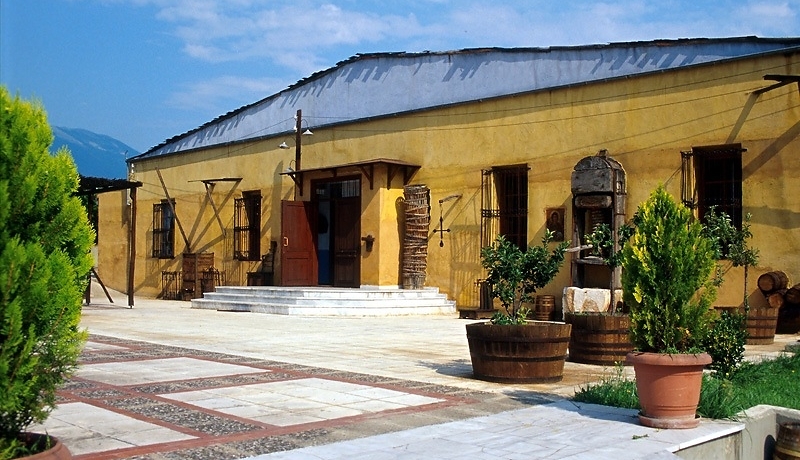
The Stenimachos facility, which serves as Boutari's primary production, bottling, and aging site in the Naoussa appellation, houses two underground concrete cellars built in 1978. Both structures developed active groundwater leakage and concrete deterioration along walls and floor surfaces — conditions that threaten the temperature stability and humidity control essential to barrel aging programs.
The Repair Specification
Engineering consultant VK Premium specified the Penetron System — a three-component crystalline waterproofing solution from The Penetron Group — to address the active leaks and rehabilitate the concrete substrate without requiring demolition or cellar decommissioning. The system combined PENEPLUG, a rapid-setting compound applied first to arrest active water ingress; PENETRON, a topically applied crystalline slurry used as a bonding primer; and PENECRETE MORTAR, a crystalline repair mortar used to fill cracks and voids before a final PENETRON slurry coat was applied across all concrete surfaces.
The chemistry works by reacting with moisture and cement hydration by-products to generate non-soluble crystals inside the concrete's pore structure, capillaries, and micro-cracks — reducing permeability and building resistance to future groundwater pressure without surface membranes or coatings that can delaminate in high-humidity environments.
Keeping Barrels in Place
The logistical constraint that defined the project: the wine barrels could not be removed from the cellars. Theodor Mentzikofakis, Managing Director and Partner of Penetron Hellas, noted that the application crew repositioned barrels to the center of each cellar to maintain wall and floor access while aging operations continued. "The Penetron System gave the project team the flexibility to complete the work around existing cellar operations while delivering an integral waterproofing solution designed for long service life," Mentzikofakis said.
For wine producers operating legacy underground infrastructure, that operational continuity is commercially significant. Removing and relocating barrels mid-aging cycle introduces risk of oxidation, temperature disruption, and potential product loss — costs that can dwarf the remediation work itself when premium or aged-designation wines are involved.
The Boutari project reflects a broader infrastructure challenge across European wine regions, where cellars built during mid-20th-century expansion now require structural intervention. Producers weighing cellar rehabilitation should account for cold-chain continuity, the compatibility of repair materials with food-adjacent environments, and the regulatory expectations tied to production facility integrity in appellation-controlled regions. For further context on wine facility infrastructure trends and supply-chain considerations affecting European imports, see our coverage of wine distribution and import dynamics and beverage manufacturing capacity.
Written by Michael Politz, Author of Guide to Restaurant Success: The Proven Process for Starting Any Restaurant Business From Scratch to Success (ISBN: 978-1-119-66896-1), Founder of Food & Beverage Magazine, the leading online magazine and resource in the industry. Designer of the Bluetooth logo and recognized in Entrepreneur Magazine's "Top 40 Under 40" for founding American Wholesale Floral, Politz is also the Co-founder of the Proof Awards and the CPG Awards and a partner in numerous consumer brands across the food and beverage sector.